Modern vehicles operating in tropical West African environments subject electrical charging systems to unprecedented demands. With ambient temperatures frequently exceeding 36°C in stop-and-go urban traffic, vehicle alternators must simultaneously power dual high-draw electric cooling radiator fans, high-output A/C blower motors, digital infotainment displays, and electronic control modules.
When a customer experiences a dead battery or flickering battery warning light on their dashboard, the prevailing workshop solution is to visit an open market and purchase a tested salvage (Tokunbo) alternator. However, diagnosing whether a salvage alternator is genuinely healthy requires rigorous technical procedures.
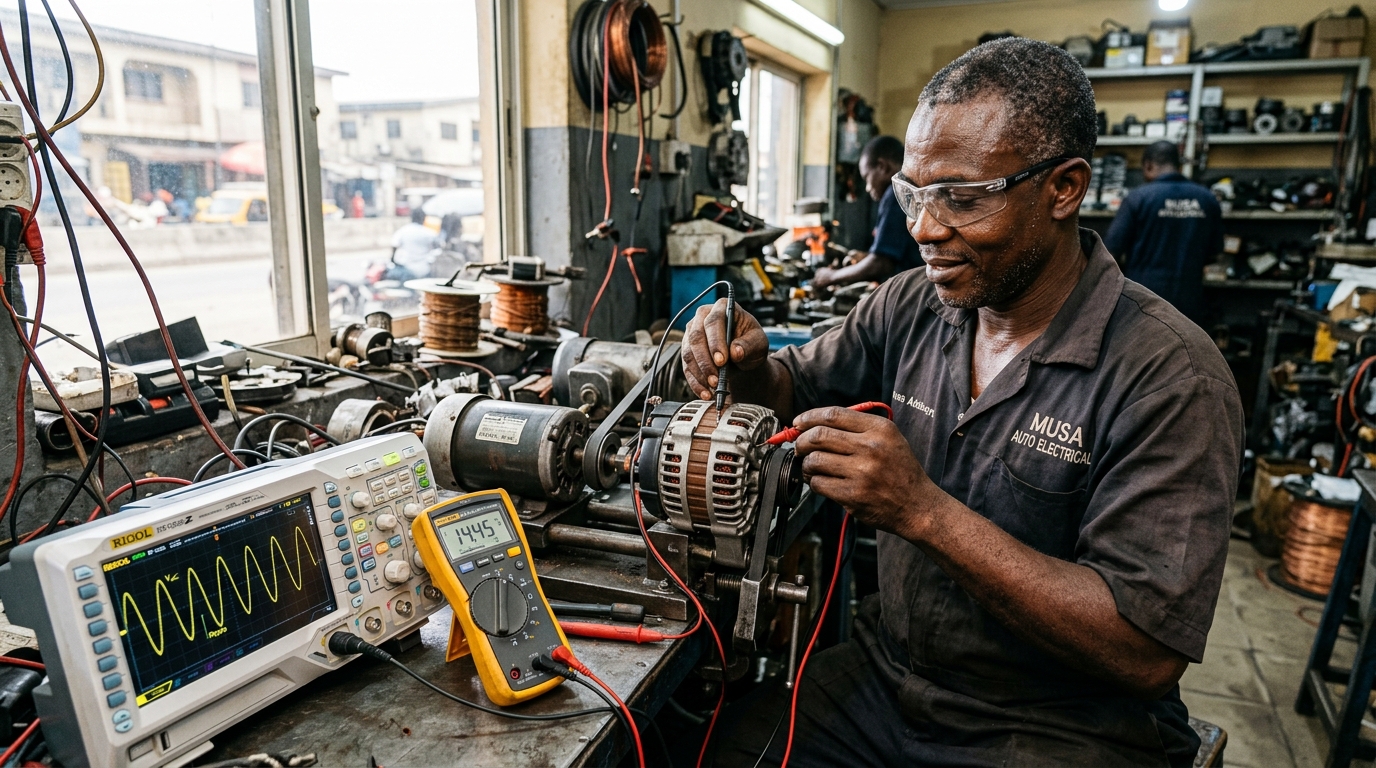
Most market vendors test an alternator using a crude physical spin test with a wire connected to an incandescent lightbulb. If the bulb lights up, the alternator is deemed "Grade A". This rudimentary check is dangerously insufficient. In modern alternators, the diode rectifier bridge consists of 6 to 12 zener diodes pressed into an aluminum heat sink. Under thermal expansion, micro-fractured solder joints open up, creating intermittent open circuits.
When installed on a customer vehicle, a degraded alternator produces excessive AC voltage ripple (greater than 0.5V AC). While the voltmeter might show 13.8V DC at idle, the high AC ripple contaminates the vehicle CAN-bus network, triggering mysterious phantom fault codes: transmission limp-mode, false oxygen sensor failures, and erratic throttle body responses.
Parts4Drive diagnostic guidelines require all certified electrical vendors to perform full oscilloscope load tests at 2,500 RPM and 60 Amp load. AC ripple must measure below 0.15V, and diode forward voltage drops must balance within ±0.03V. Technicians purchasing on Parts4Drive receive tested, certified electrical components with full functional guarantees.