Tested salvage auto parts—known colloquially as "Tokunbo" across Nigeria and West Africa—form the lifeblood of regional mobility. Representing over 70% of total replacement parts installed by commercial mechanics, these components offer OEM Japanese and European manufacturing standards at accessible price points.
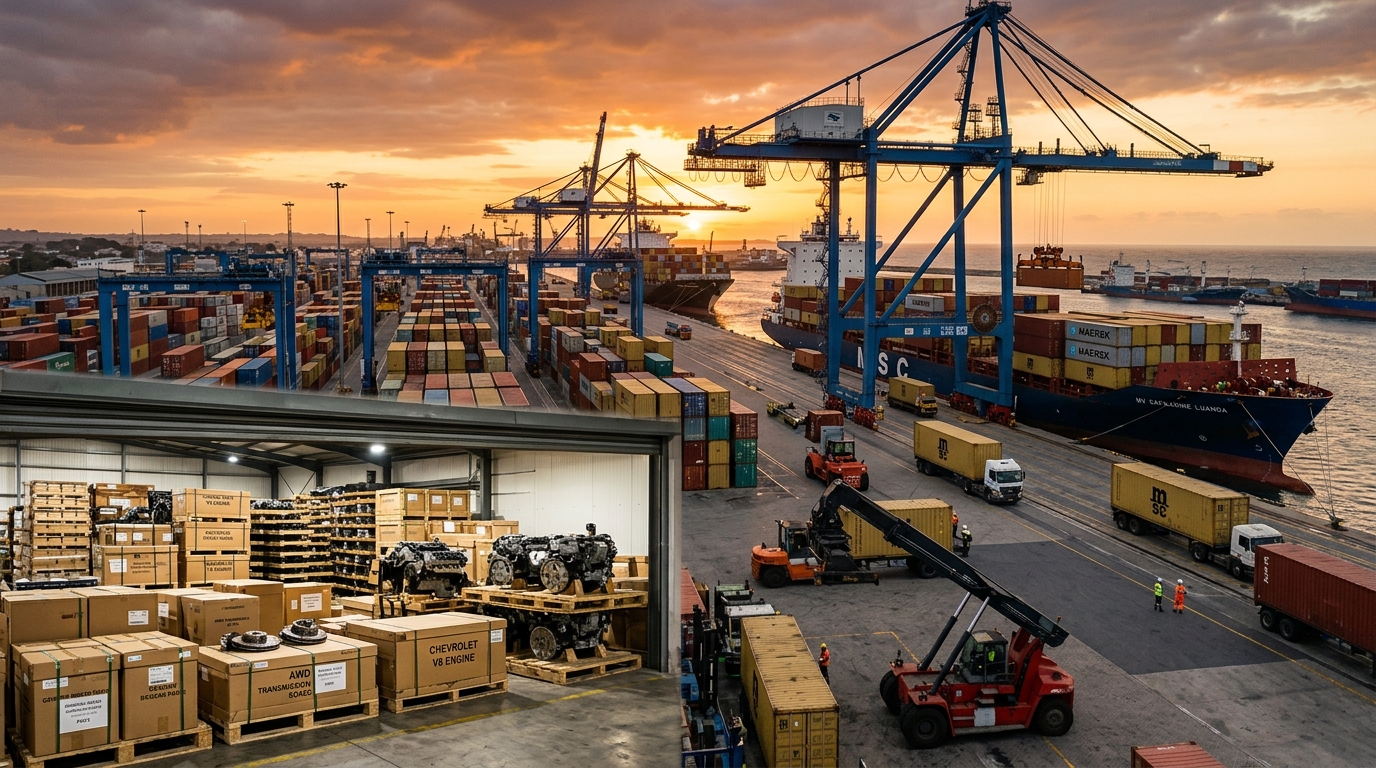
Yet the logistics of managing container-load salvage imports historically involved staggering operational inefficiencies. A standard 40-foot high-cube shipping container docking at Apapa Port in Lagos or Tema Harbour in Ghana contains between 400 and 1,200 heterogeneous components: engine blocks, steering racks, transaxles, wiring harnesses, and suspension struts stacked tightly together.
Traditionally, importers documented these shipments on handwritten paper tally sheets. Once unloaded into multi-story warehouse stalls in markets like Ladipo or Abossey Okai, parts were placed wherever floor space allowed. Counter staff frequently spent 30 to 45 minutes walking through warehouse aisles attempting to locate a specific transmission or alternator requested by a waiting mechanic.
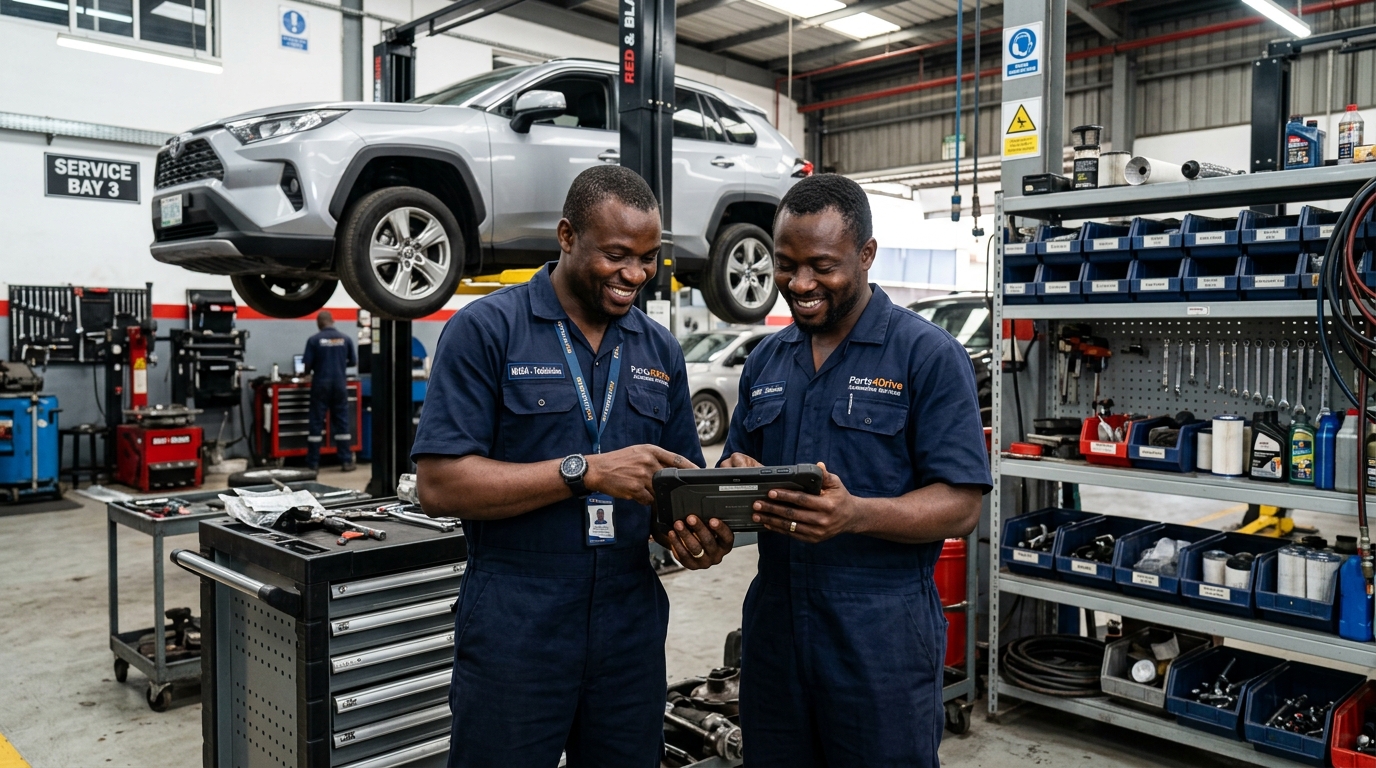
Parts4Drive Merchant OS transforms this container ingestion pipeline. Using mobile handheld barcode and QR scanning, warehouse receiving teams serialize each untested and tested salvage unit as it exits the container door. Parts are assigned standardized condition grades, tested for electrical and hydraulic tolerance, and mapped directly to specific warehouse aisle, rack, and bin coordinates.
When an online customer or workshop orders that part via Parts4Drive or WhatsApp, the system prints an automated pick ticket with the exact stall aisle bin location. The result is a 90% reduction in dispatch latency and complete operational visibility across the maritime automotive corridor.