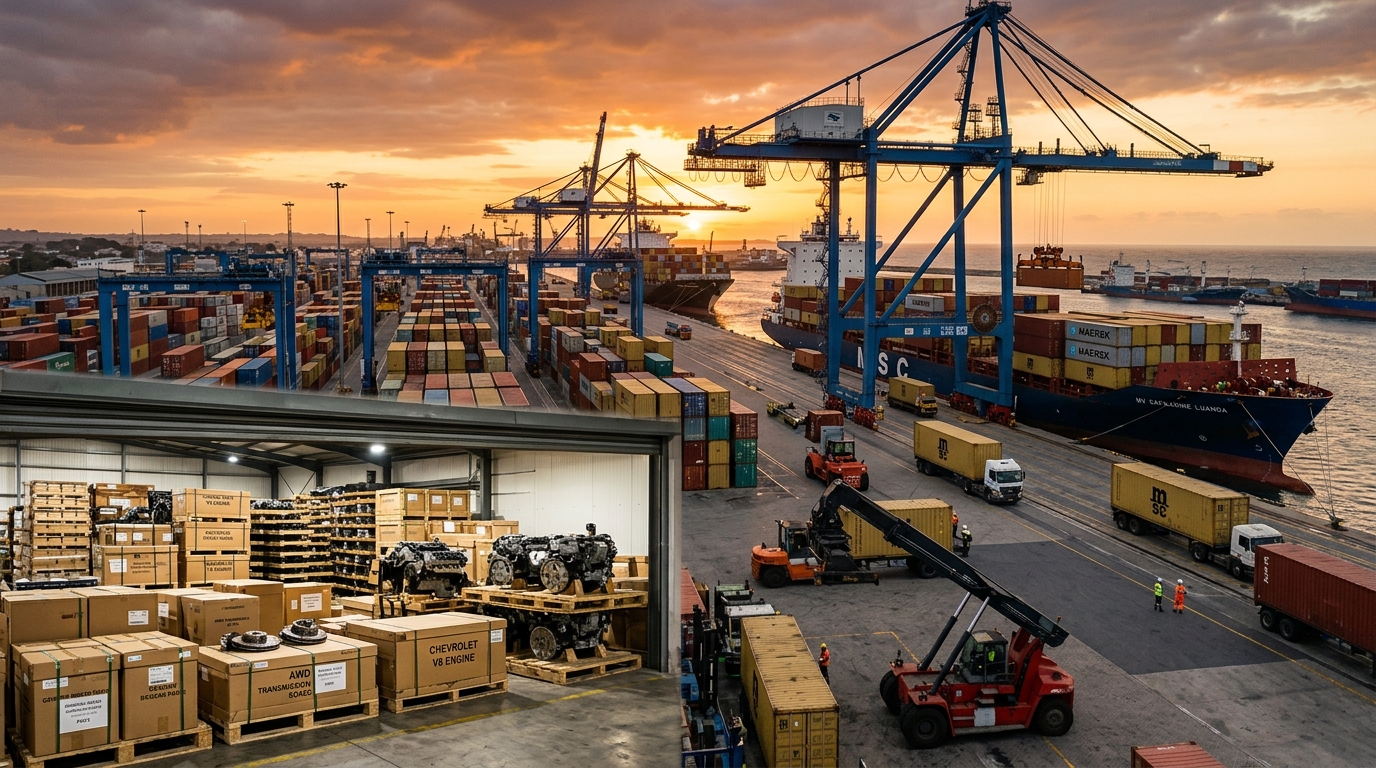

Automotive replacement parts distributed across West Africa are overwhelmingly imported from manufacturing and dismantling centers in Japan, South Korea, Germany, and North America. Consequently, auto spare parts importers must settle supplier invoices in US Dollars, Euros, or Japanese Yen.
However, retail counter sales and wholesale workshop distributions occur strictly in domestic currencies—primarily Nigerian Naira (NGN) and Ghanaian Cedi (GHS). Over the past three years, significant foreign exchange volatility across West African corridors has created unprecedented challenges for aftermarket dealers.
When local currencies depreciate, an auto distributor who sold an engine assembly for 500,000 NGN or 6,000 GHS often discovers that replenishing that identical inventory from international suppliers requires 25% to 40% more capital than the original sale generated. Without automated exchange rate tracking, distributors inadvertently decapitalize their business while appearing profitable on paper.
Parts4Drive addresses this macroeconomic reality with automated Multi-Currency Inventory Pegging. Merchants can define base wholesale acquisition costs in stable benchmark currencies. The platform monitors central bank and regional FX market corridors in real-time, automatically calculating updated shelf and counter prices to safeguard merchant gross margins.
By decoupling counter pricing from manual calculations and protecting working capital against inflation, Parts4Drive provides the financial foundation for sustainable automotive logistics across Africa.